
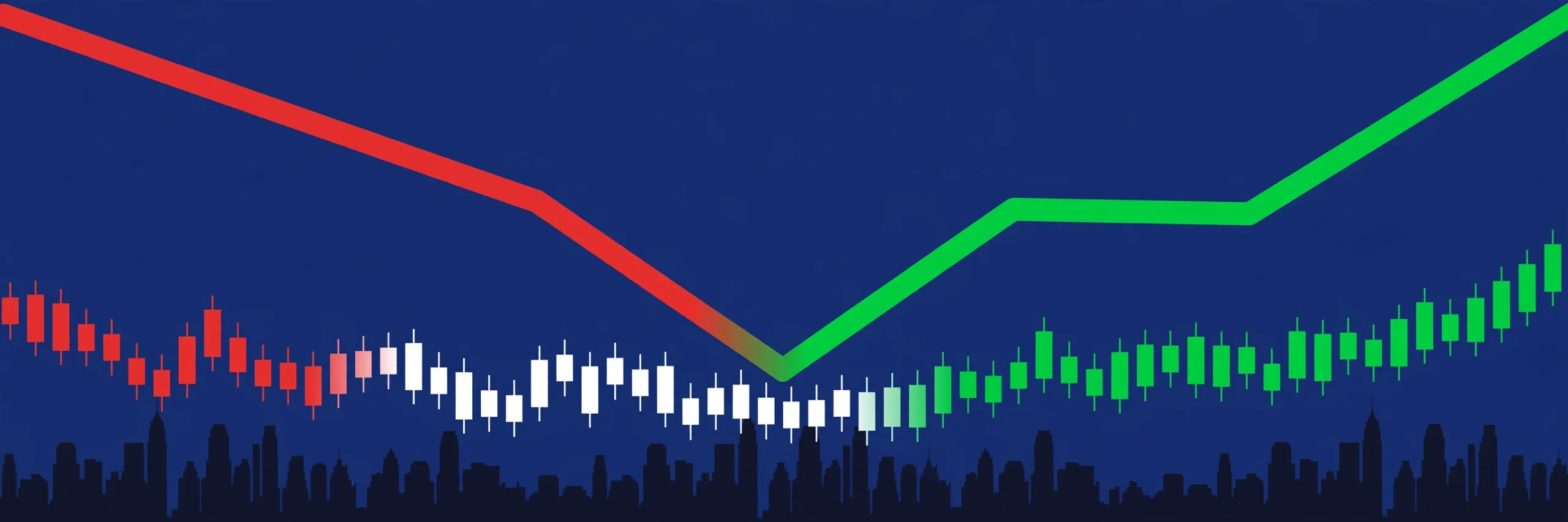
Wall Street just took a beating — and then, after the closing bell, the biggest company on the planet delivered a quarter so strong it changed the mood overnight. The S&P 500 fell for a fourth straight day on Tuesday, closing at its lowest level since late July, and the Dow dropped 849 points. Then Nvidia reported $115.8 billion in revenue, up 103% from a year ago, and futures turned green. Here is what actually happened, why it happened, and what to watch next — without the panic.
Key Takeaways
- The S&P 500 fell 1.03% to 7,340.53 on Tuesday — its lowest close since late July and its fourth straight down day. The Dow lost 848.75 points (-1.64%) and the Nasdaq slipped 0.74%.
- Nvidia beat big after the bell: Q3 revenue of $115.84 billion vs about $109.1 billion expected, adjusted earnings of $2.68 a share vs $2.48 expected, and next-quarter guidance of about $130 billion vs roughly $125 billion expected.
- The market fell before Nvidia reported, so the beat could not save Tuesday’s session — but Nasdaq 100 futures rose 1.17% and S&P 500 futures 0.62% overnight.
- The real driver is the Fed: traders now price a roughly 95% chance of a rate hike at the December meeting after October inflation came in hot at +0.4%.
- The Fed’s own minutes land tonight — 2:00 p.m. Eastern, which is midnight Pakistan time — and they are the next big test for the market.
Tuesday’s Sell-Off in Numbers
Tuesday was ugly across the board. Every single sector of the S&P 500 fell, and the fear gauge — the VIX — jumped 11.1% to 25.46. Here is the damage at the close:
| Index | Close | Change |
|---|---|---|
| Dow Jones Industrial Average | 50,759.42 | -848.75 points (-1.64%) |
| S&P 500 | 7,340.53 | -1.03% |
| Nasdaq Composite | 24,328.38 | -0.74% |
| VIX (volatility index) | 25.46 | +11.1% |
The S&P 500’s close was its lowest since late July. The Dow’s 849-point drop was the worst of the four-day slide, and the selling had nothing to do with Nvidia — the chipmaker’s results came out after the market closed.
Nvidia’s $116 Billion Quarter: What Actually Happened
Nvidia’s third-quarter results for fiscal 2027 — the quarter ended October 25, 2026 — were a clean beat on almost every line that matters:
| Metric | Result | Expected |
|---|---|---|
| Revenue | $115.84 billion (+103% YoY) | ~$109.1 billion expected |
| Adjusted earnings per share | $2.68 | $2.48 expected |
| Data centre revenue | $107.6 billion | — |
| Next-quarter revenue guidance | ~$130 billion (±3%) | ~$125.25 billion expected |
The guidance matters most. Nvidia told investors it expects about $130 billion in revenue this quarter — roughly $5 billion more than analysts had pencilled in — and raised its growth outlook for next year’s revenue to 75% from 70%. Shares rose about 3% in after-hours trading, and chip stocks from AMD to Micron rose with it. Asian markets split overnight: Taiwan’s index jumped more than 800 points, while Hong Kong, Shanghai and Sydney stayed in the red.
This was Nvidia’s first report since co-founder Jensen Huang resigned as chief executive on November 12. Interim chief executive Colette Kress led the call:
“Our momentum is real.” — Colette Kress, Nvidia’s interim chief executive, on the earnings call (via Reuters)
The beat is even more striking in context: Nvidia’s stock is down about 17% this year, it has fallen for six straight weeks — its longest losing streak since 2012 — and its market value slipped below $4 trillion on November 13 for the first time since July 2025. The question is whether one great quarter can steady a nervous market.
Why Stocks Fell Even Before Nvidia Reported
The sell-off was not about Nvidia at all. It was about interest rates — the same story that has been pushing mortgage rates higher all week.
First, inflation came in hot. October CPI rose 0.4% in a month, above the 0.3% forecast, and core inflation has now risen 0.3% for a third straight month. That killed hopes that the Fed would stay on hold, and traders now price a roughly 95% chance of a rate hike at the December 8–9 meeting, according to the CME FedWatch tool. Higher rates for longer means higher borrowing costs for companies and households — and that is exactly why mortgage rates hit 7.27% this week, as we covered in our Mortgage Rates This Week update.
Second, the economic data is softening. Industrial output weakened, and homebuilder confidence fell to its lowest since April 2012.
Third, four straight down days feed on themselves. Once the S&P 500 broke below its recent range, selling picked up speed, and the VIX jumping past 25 told you traders were paying up for protection. That is not a crash — it is a market repricing what the Fed will do next.
What It Means for Your Money
Here is the honest version: a 1% down day feels awful, but it is normal market weather. What matters is what you do next, and the boring answer is usually the right one.
If you are investing for retirement in a 401(k) or an index fund, a four-day slide does not change the plan. Selling after a drop locks in the loss and leaves you guessing when to get back in. Keep contributing through the red days — that is when the same money buys more shares.
If you are sitting on cash and wondering whether to jump in, do not try to catch the exact bottom. Nobody rings a bell at the low. A steadier move is to invest a fixed amount on a regular schedule and let the dips work for you — the same habit our Personal Finance for Beginners guide walks through step by step.
And if a market wobble makes you lose sleep, that is useful information: it usually means your emergency fund is too thin, not that your investments are wrong. Three to six months of expenses in a high-yield savings account turns a scary headline into background noise.
What to Watch Next
Three dates matter more than anything else this week.
Tonight, midnight Pakistan time (2:00 p.m. Eastern): the Fed’s minutes. The minutes of the October 27–28 meeting — when the Fed held rates at 3.75%–4% in a 10–2 vote — will show how close the committee was to hiking. If the minutes sound hawkish, expect another rough session. If they sound divided, the market may breathe easier.
December 8–9: the Fed’s rate decision. A 25-basis-point hike is almost fully priced in; the surprise would be a 50-point move, which traders give roughly 13% odds. See the Federal Reserve’s FOMC meeting calendar for the full schedule.
December 10: the November CPI report. The October number (+0.4%) is what lit the fuse. If November comes in hot again, rate-hike bets climb further. If it cools, the whole story flips.
Do This / Skip That
Do this: check your emergency fund before you check your portfolio. Keep regular contributions going. Read the Fed minutes tonight before reacting to any headline.
Skip that: panic-selling after a 1% drop. Buying a single hot stock because of one earnings beat. Checking your 401(k) balance five times a day — it only makes the dips feel bigger than they are.
Bottom Line
Tuesday was a bad day, but it was a bad day with a clear cause: hot inflation pushed rate-hike odds near 95%, and the market repriced. Then Nvidia delivered a $116 billion quarter, and futures turned higher. One earnings report does not end a rate scare, and the Fed minutes tonight will matter more than anything Nvidia said. Stay steady, keep your emergency fund full, and let the plan do the work.
Read Next
- Mortgage Rates This Week: 30-Year Fixed Hits 7.27% After Hot Inflation Report — the same rate-hike story, from the homebuyer’s side.
- Real Estate Investing for Beginners 2026: Where to Start — how to think about property when rates stay high.
- New Year Money Resolutions 2027: 7 Goals That Actually Stick — turn a shaky market into a stronger 2027 plan.
Figures as of November 18, 2026 — verify before acting. This article is for general information only and is not financial advice.
1 thought on “Stock Market Today: S&P 500 Hits Lowest Close Since July as Nvidia’s $116 Billion Beat Lifts Futures”